Mastering Mold Springs: Crafting High-Quality Japanese Standard Compression Springs for Die Moulds
2025-08-08
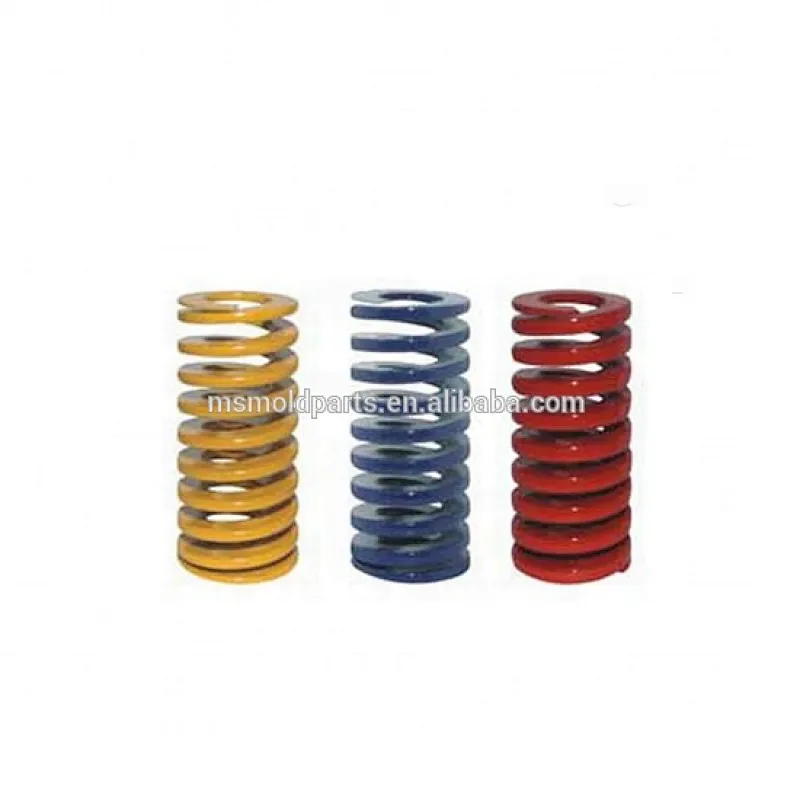
Mold springs are critical components in die moulds, providing consistent force and resilience to ensure smooth operation in manufacturing—especially in vehicle moulds. Achieving excellence in Japanese standard compression springs requires precision, quality materials, and adherence to strict standards. This blog outlines how to perfect these essential components.
Table of Contents
- Key Principles to Produce Superior Mold Springs
- Technical Specifications of Our Mold Springs
- Applications in Vehicle Moulds and Beyond
- Expert Insights on Mold Spring Quality
- FAQs: Ensuring Optimal Performance of Mold Springs
- Our Commitment to Excellence in Mold Springs
Key Principles to Produce Superior Mold Springs
1. Select Premium Materials
The foundation of a reliable mold spring lies in high-grade steel. We use SUP3, SUP6, SUP7, SUP9, and SUP10—Japanese industrial steels renowned for their elasticity, fatigue resistance, and heat tolerance. These materials ensure springs withstand repeated compression cycles without losing tension.
2. Adhere to Japanese and Global Standards
Compliance with Japanese standard (JIS) and German standard (DIN) ensures compatibility with international mould systems. Strict adherence to dimensions, load capacity, and deflection limits guarantees seamless integration into vehicle moulds and other industrial setups.
3. Precision Manufacturing via Plastic Injection Mould Shaping
Our Plastic Injection Mould shaping mode ensures uniform coiling and consistent wire diameter—critical for even force distribution. This process minimizes defects, such as uneven stress points, which can cause premature failure.
4. Durable Plating for Corrosion Resistance
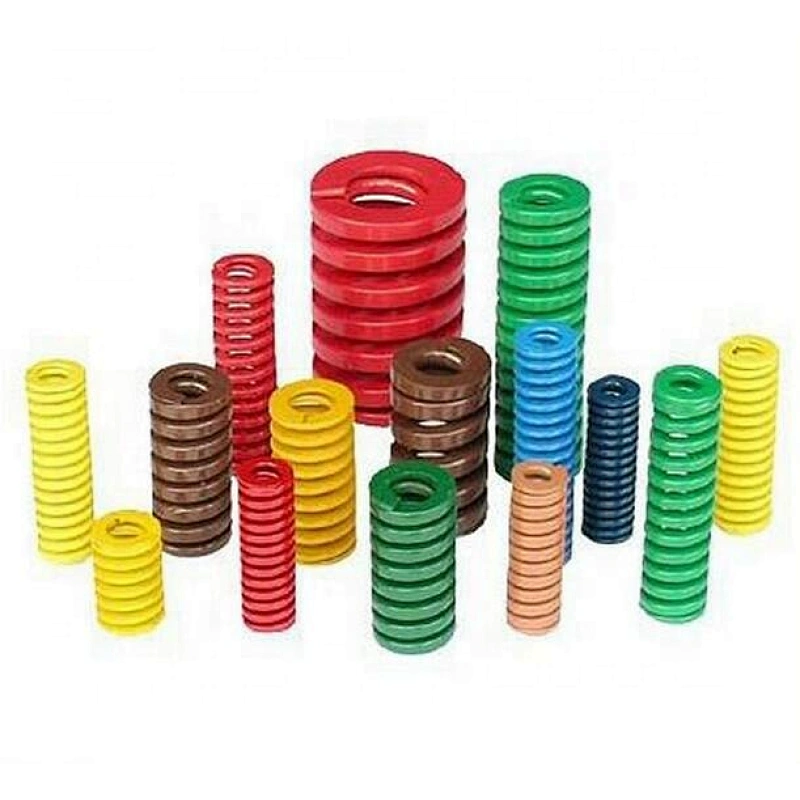
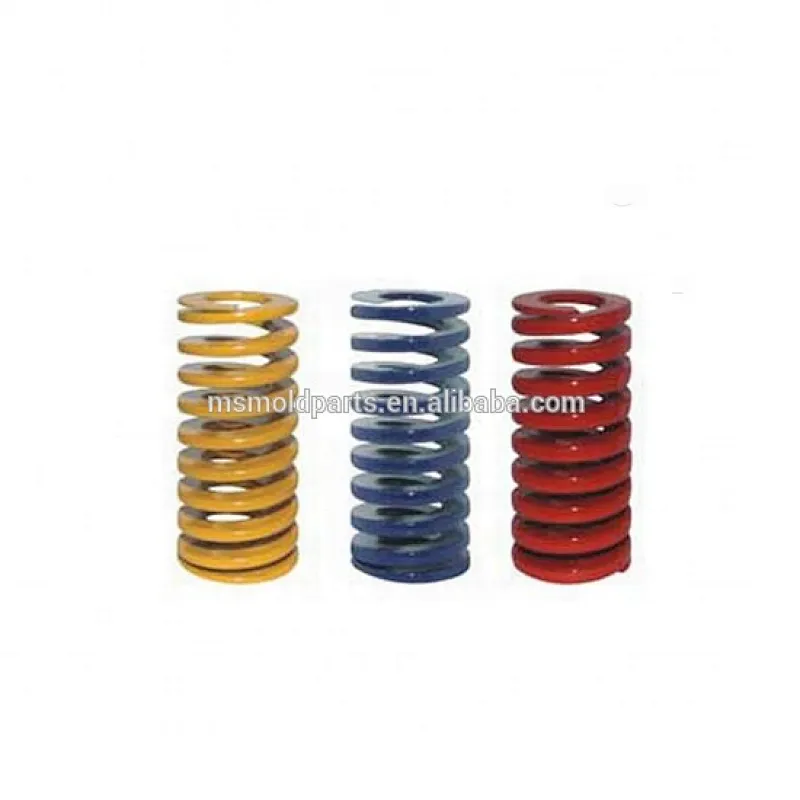
Mold springs are plated in yellow, blue, red, green, and brown to indicate load classes and enhance corrosion resistance. This plating protects against moisture and industrial fluids, extending spring lifespan in harsh manufacturing environments.
Technical Specifications of Our Mold Springs.
| Parameter | Details |
|---|---|
| Product Name | Mold component Springs |
| Standards | Japanese standard, German standard mold die springs |
| Plating Colors | Yellow, blue, red, green, brown |
| Certification | ISO9001:2008 |
| Materials | SUP3, SUP6, SUP7, SUP9, SUP10 (steel) |
| Shipment | Fedex, DHL, UPS, TNT |
| Delivery Time | 7-8 working days |
| Payment | T.T, Western Union, Paypal |
| Shaping Mode | Plastic Injection Mould |
| Application | Vehicle Mould |
| Place of Origin | CN;GUA |
| Brand Name | MS Mold Parts |
| Model Number | ms mold parts |
Applications in Vehicle Moulds and Beyond
Mold springs are indispensable in vehicle moulds, where they facilitate precise opening/closing of moulds during plastic injection or metal stamping. They ensure consistent pressure distribution, critical for shaping automotive parts like bumpers, dashboards, and engine components. Beyond automotive, they are used in electronics and appliance moulds, where reliability directly impacts production efficiency.
Expert Insights on Mold Spring Quality
Mr. Takeshi Tanaka, a Japanese mould engineering consultant with 25 years of experience, notes: “Superior mold springs depend on three factors: material purity, precision coiling, and strict standard compliance. Japanese standards demand tight tolerances for load stability—qualities I’ve observed in MS Mold Parts’ products. Their use of SUP series steels and ISO certification reflects a commitment to longevity in high-cycle manufacturing.”
FAQs: Ensuring Optimal Performance of Mold Springs
1. How do plating colors affect spring performance?
Colors indicate load capacity (e.g., red for medium load, blue for heavy load) and provide corrosion resistance—critical for springs in humid or chemical-exposed environments.
2. Why choose Japanese standard over other standards?
Japanese standards prioritize fatigue resistance and dimensional precision, making them ideal for high-cycle applications like vehicle moulds, where springs endure thousands of compressions daily.
3. Can springs be customized for specific loads?
Yes, we offer customizations based on your drawings, while maintaining compliance with Japanese or German standards. Contact our team with your requirements.
4. What is the typical lifespan of these mold springs?
With SUP series steel and proper maintenance, our springs last 1-2 million cycles in standard vehicle mould operations—significantly longer than generic alternatives.
Our Commitment to Excellence in Mold Springs

At MS Mold Parts, we combine premium SUP steels, Japanese standard precision, and ISO9001:2008-certified processes to deliver mold springs that excel in durability and performance. With 7-8 day delivery, flexible payments, and tailored solutions for vehicle moulds, we ensure your manufacturing line runs smoothly. Trust us to provide springs that meet your exact specifications—every time.
Mold Springs: Essential Characteristics, Types & Expert Guidance